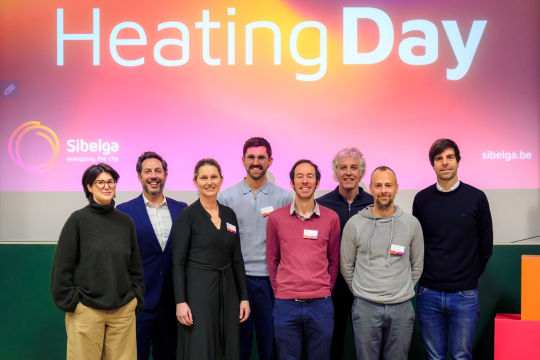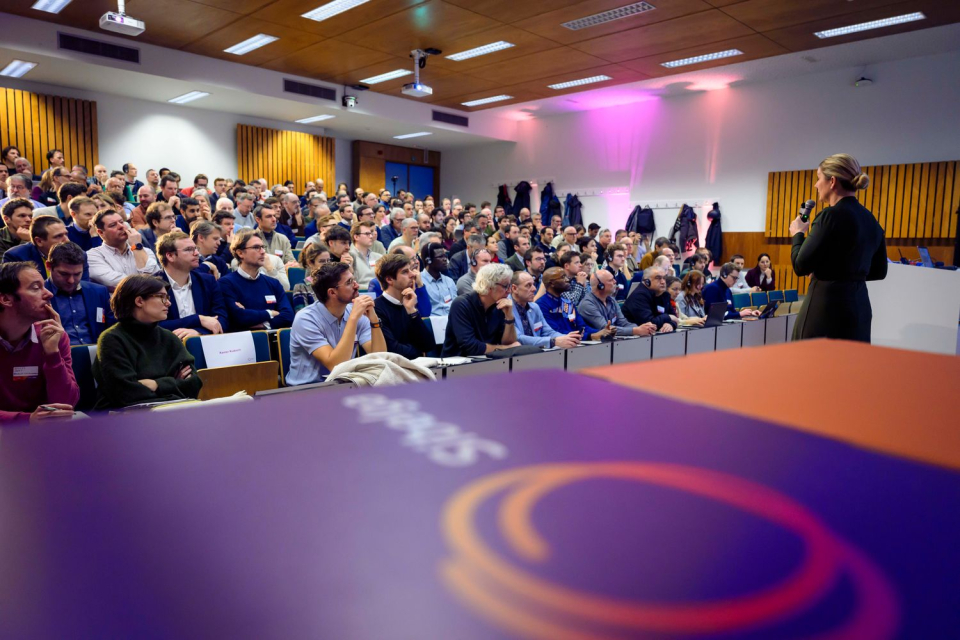
On Tuesday 3 February, Sibelga brought together nearly 175 partners, experts, public decision-makers and industry players for a morning entirely dedicated to one of the greatest challenges of the energy transition: the future of heating in Brussels.
A shared observation
With over 90% of housing stock still heated by gas, the Region is rethinking its approach to heating in order to achieve carbon neutrality by 2050.
Heating Day was an opportunity to:
- establish a common analysis,
- compare viewpoints,
- open a structured dialogue on the key issue of how heating can be decarbonised in a dense and complex city like Brussels.
A structural issue, a collective challenge
Decarbonising heating will involve more than replacing one technology with another. It will require:
- major building renovations,
- the use of the appropriate energy sources depending on the district,
- the coordinated mobilisation of public, private and academic stakeholders,
- and the anticipation of future energy needs.
A morning of inspiring speeches
Opening speech
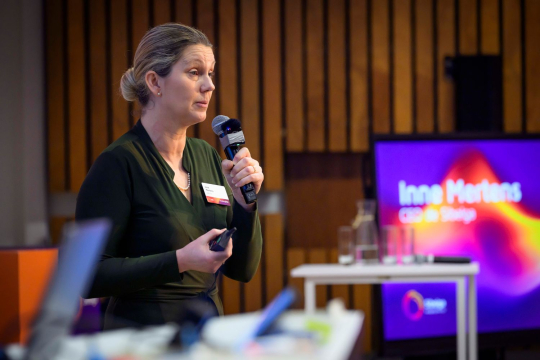
Inne Mertens, CEO of Sibelga, emphasised that the transition to carbon-free heating is part of a shift towards a diversified energy system based on a mix of electrons and molecules.
She highlighted the complementarity between collective solutions such as heat networks and geothermal energy, and individual solutions, such as heat pumps and biogas, while stressing that this transition is first and foremost a human endeavour that requires the involvement of all stakeholders.
Inspiration from abroad: the example of Amsterdam
Nabil Tanouti (City of Amsterdam) presented the Amsterdam Heat Plan, a pioneering policy based on robust spatial planning and combining renovation, heat networks and flexibility.
The case of Brussels: Taskforce Energy 50
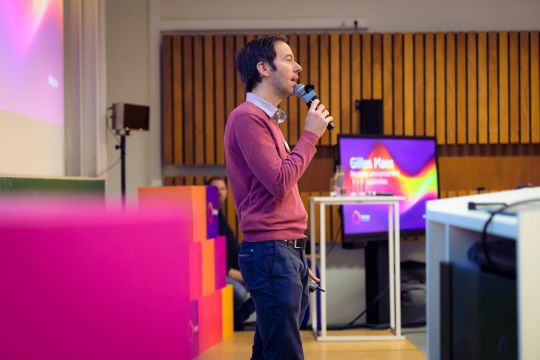
Gilles Maes (Brussels Environment) presented the regional vision for 2050, with a map of the most suitable technologies for each district. This study was developed based on the region's actual potential - geothermal energy, aquathermal energy, waste heat, heat pumps and biomethane - in order to guide public and private investment.
Collective transition by district
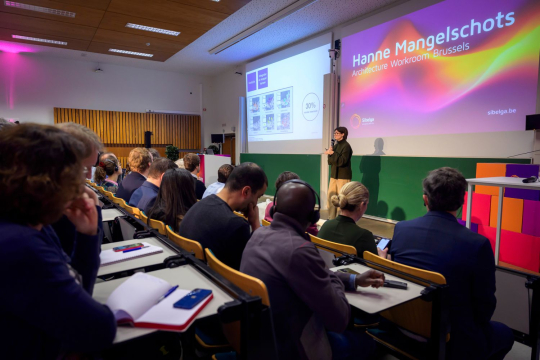
Hanne Mangelschots (Architecture Workroom Brussels) described how to involve residents, municipalities, managers and professionals in achieving a successful energy transition at grassroots level.
Concrete solutions, today and in the future
The second part of the morning provided an opportunity to explore the available solutions and their level of maturity in greater depth:
- Heat pumps for individuals - Xavier Kuborn (Buildwise): technical challenges and key conditions for guaranteeing the performance of heat pumps in residential renovations.
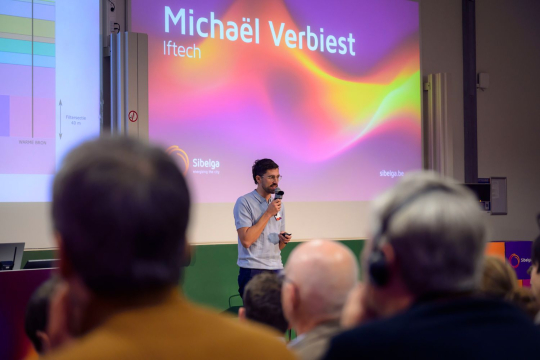
- Solutions for high-volume consumers - Michaël Verbiest (Iftech): different potential solutions using geothermal energy and examples of specific projects carried out in Brussels.
- Urban heat networks: - Nicolas Spilleboudt (Sibelga): focus on two projects under construction in northern Brussels, including the Neder-Over-Heembeek network, which recovers heat from waste incineration, and the Be.share project, which combines heating and cooling at district level.
- Innovation and academic research - Svend Bram (VUB): emerging technologies in the field of heating and avenues for development.
Relive the highlights in pictures